- AR/VR & Immersive Technologies
- Blockchain & Web3
- Certification-Focused Tracks
- Cloud & Infra
- Communication & High-Performance Skills
- Cyber Security & Digital Defense
- Data & AI
- DevOps & Platform Engineering
 Foundation Courses
- Innovation & Strategic Thinking
- Innovation Lab
- IoT & Embedded Systems
- Placement & Internship Programs
- Product & Program Leadership
- Quantum Computing
- Robotics & Intelligent Automation
- Semiconductor & Hardware Technologies
- Software Development & Application Engineering
- Tech Career Launch Tracks (3–6 Months)
Our Top Courses
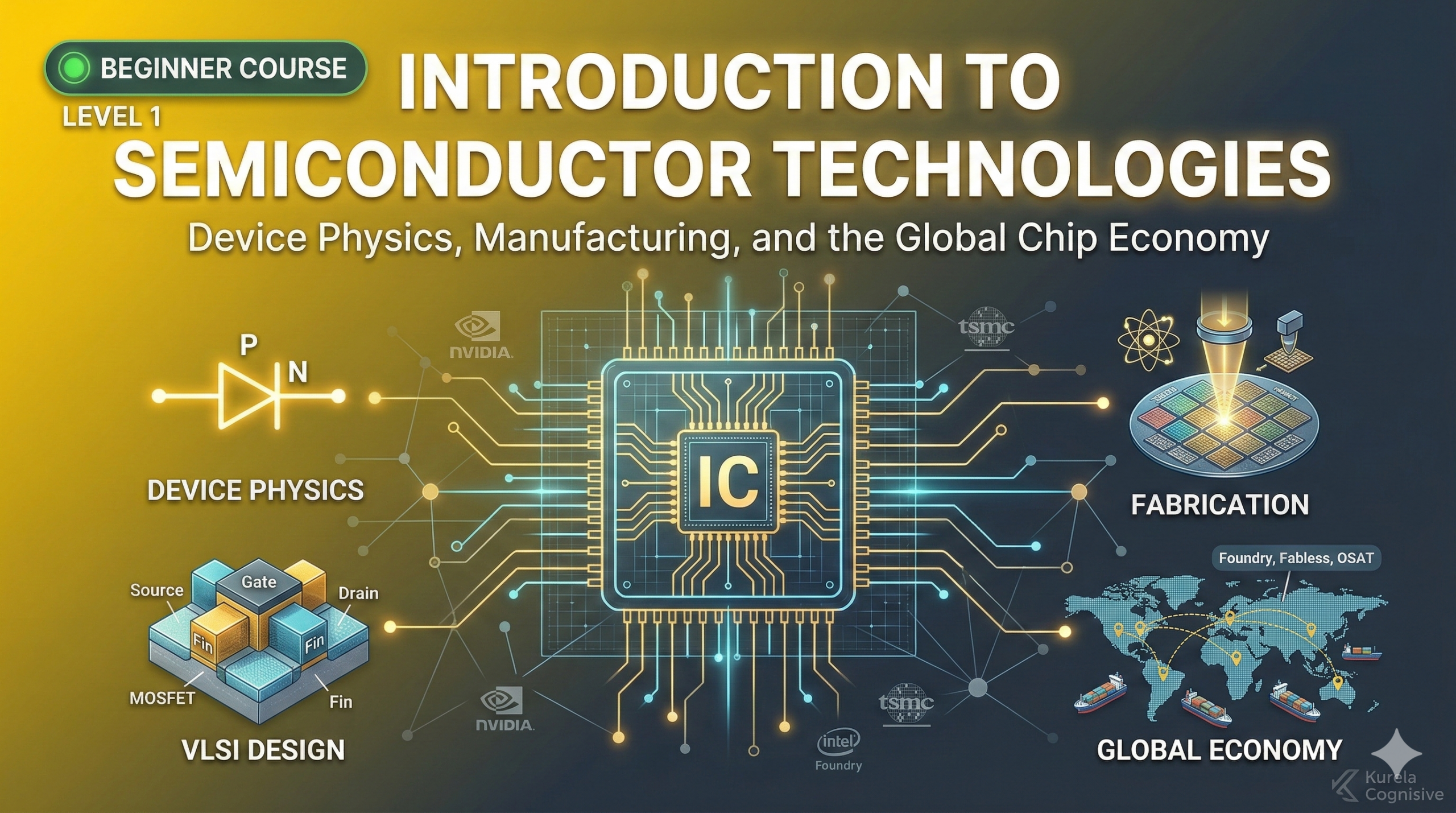
Introduction to Semiconductor Technologies
Original price was: ₹100.00.₹90.00Current price is: ₹90.00.
subsidiary of Kurela Cognisive Pvt. Ltd.

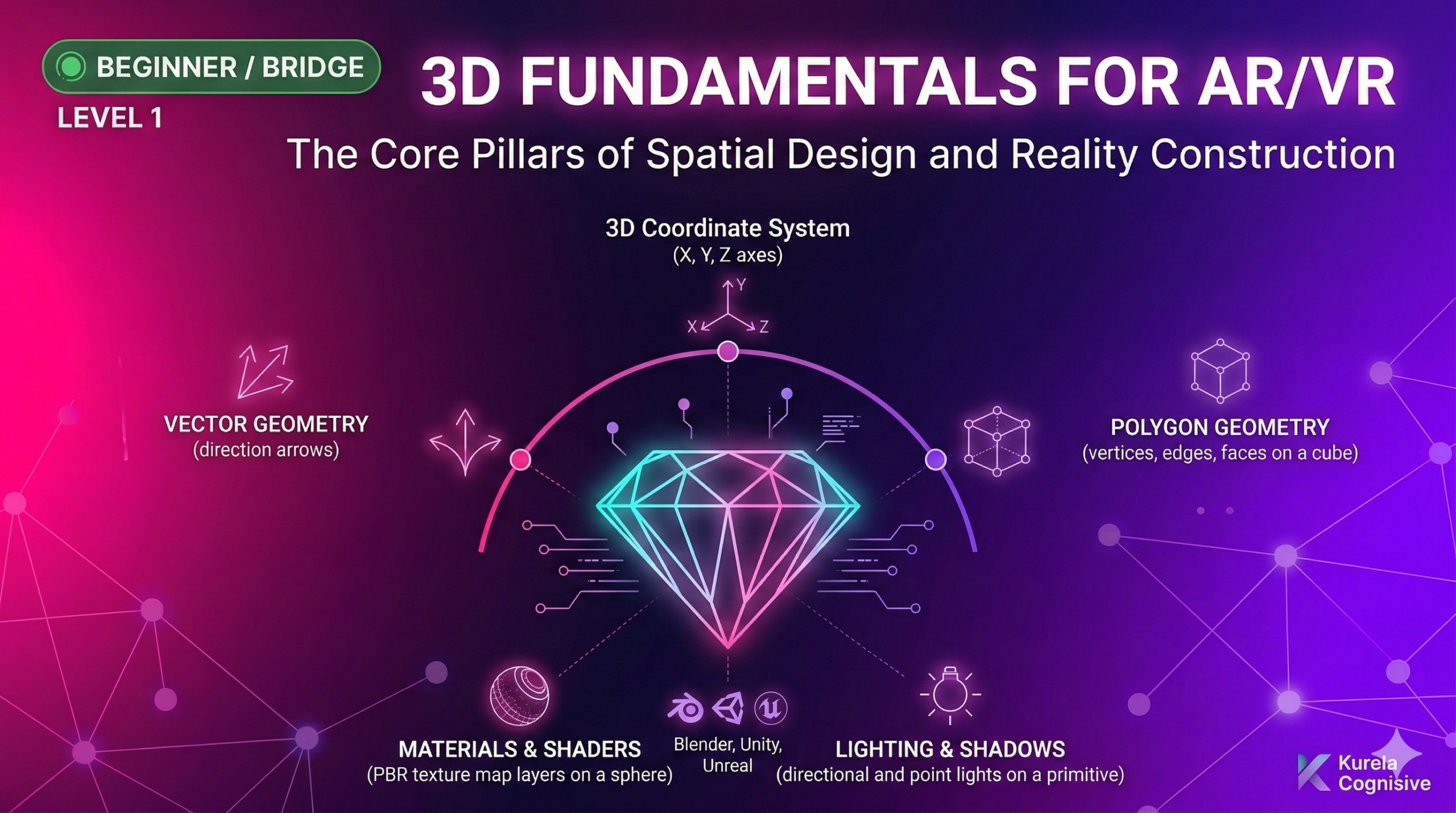
3D Fundamentals for AR/VR
Augmented Reality (AR) and Virtual Reality (VR) experiences are built on powerful 3D environments that simulate the real world or create entirely new digital worlds. Understanding how 3D objects, environments, and spatial interactions work is the foundation for building immersive AR/VR applications.
This course introduces the fundamental concepts of 3D graphics and spatial computing used in AR and VR development. You will learn how 3D objects are created, positioned, and rendered inside digital environments, and how immersive systems use coordinate systems, lighting, textures, and physics to create realistic experiences.
Learners will explore...
0 Student

Original price was: ₹100.00.₹90.00Current price is: ₹90.00.
Course Prerequisite(s)
- Please note that this course has the following prerequisites which must be completed before it can be accessed
-
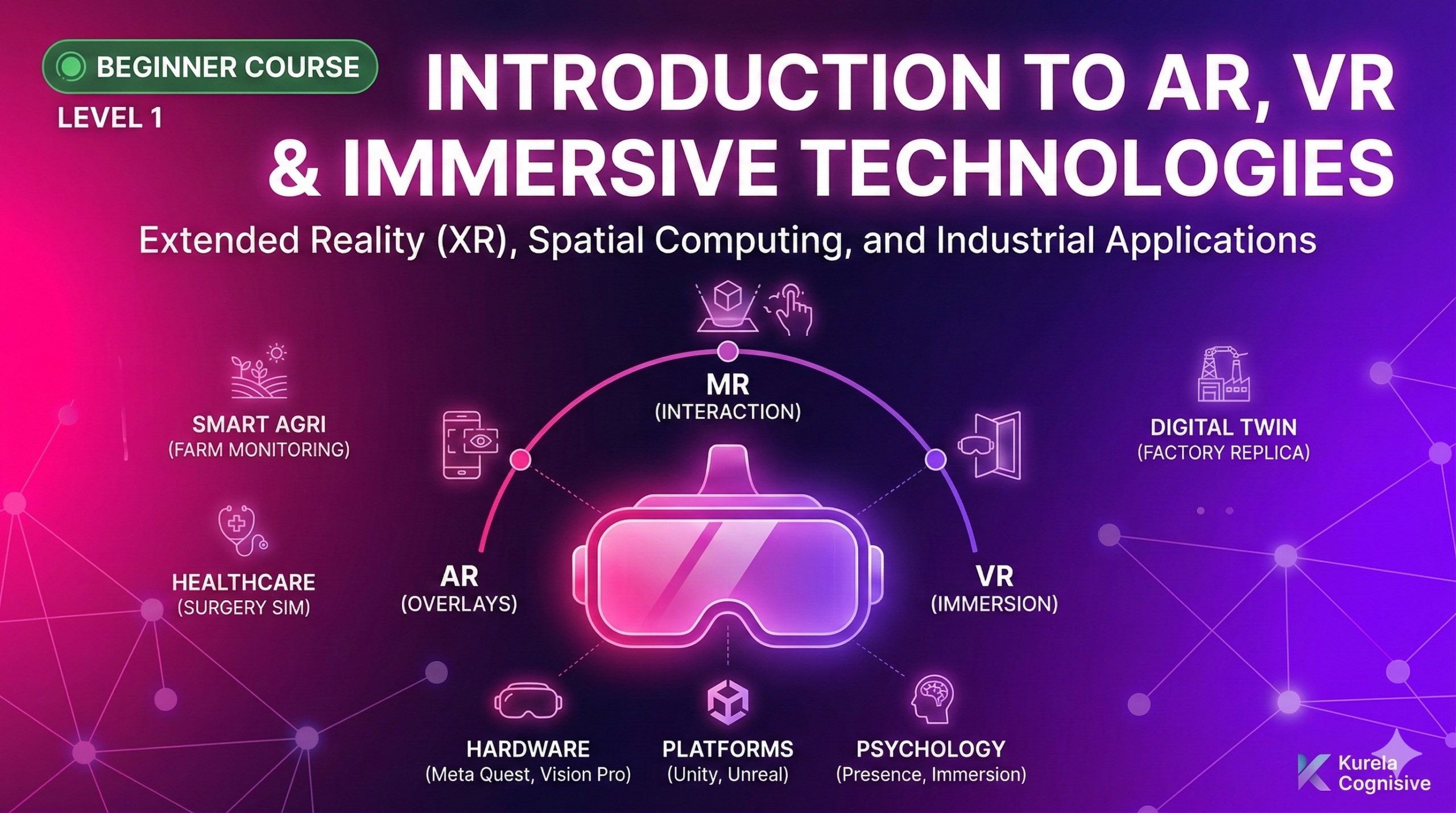 Introduction to AR, VR & Immersive Technologies
About Course
Augmented Reality (AR) and Virtual Reality (VR) experiences are built on powerful 3D environments that simulate the real world or create entirely new digital worlds. Understanding how 3D objects, environments, and spatial interactions work is the foundation for building immersive AR/VR applications.
This course introduces the fundamental concepts of 3D graphics and spatial computing used in AR and VR development. You will learn how 3D objects are created, positioned, and rendered inside digital environments, and how immersive systems use coordinate systems, lighting, textures, and physics to create realistic experiences.
Learners will explore the core building blocks of immersive environments, including 3D models, scenes, cameras, lighting, textures, and object interactions. The course also explains how 3D environments are optimized for real-time rendering used in AR/VR applications.
In this course you will discover
• The fundamentals of 3D graphics used in AR and VR applications
• How 3D objects and environments are created and structured
• The role of coordinate systems, cameras, and lighting in immersive environments
• How textures, materials, and shading create realistic 3D visuals
• The principles of real-time rendering used in AR/VR platforms
• How spatial computing allows users to interact with digital objects
Why 3D fundamentals matter in immersive technologies
Every AR or VR experience relies on 3D environments to simulate realistic digital worlds. These environments power applications such as:
• Virtual training simulations
• Immersive gaming environments
• Product visualization and design
• Virtual collaboration spaces
• Digital twin simulations
• Metaverse environments
Understanding 3D fundamentals is essential for anyone who wants to build immersive applications, design virtual environments, or develop AR/VR experiences.
By the end of this course
You will understand:
• How 3D environments are structured and rendered
• How objects are positioned and manipulated in digital space
• How lighting, materials, and textures create realistic visuals
• The role of 3D systems in AR and VR development
This course prepares learners for advanced topics such as 3D modeling, immersive environment creation, AR/VR development with Unity, and interactive immersive experiences.
Benefits of the course
- Understand the fundamentals of 3D graphics used in AR and VR applications.
- Learn how 3D environments and digital scenes are structured.
- Understand coordinate systems used in immersive environments.
- Learn how cameras and lighting affect virtual scenes.
- Understand textures, materials, and shading techniques used in 3D environments.
- Learn the basics of real-time rendering used in AR/VR systems.
- Understand how users interact with objects in 3D environments.
- Explore the role of spatial computing in immersive technologies.
- Learn how 3D assets are used in AR/VR development platforms.
- Prepare for learning advanced 3D modeling and immersive environment development.
Instructor
Original price was: ₹100.00.₹90.00Current price is: ₹90.00.
- Update:March 5, 2026
- Skill LevelBeginner
Your Instructor
Venkat Kurela
- 0 Courses
- 2 Reviews
- 0 Students
Target Audience
- Students interested in AR, VR, and immersive technologies.
- Developers planning to build AR or VR applications.
- Designers interested in creating immersive digital environments.
- Game developers exploring 3D environments and rendering systems.
- Anyone interested in learning how 3D graphics power immersive experiences.
Show More
TOP COURSE
More Course By Venkat Kurela
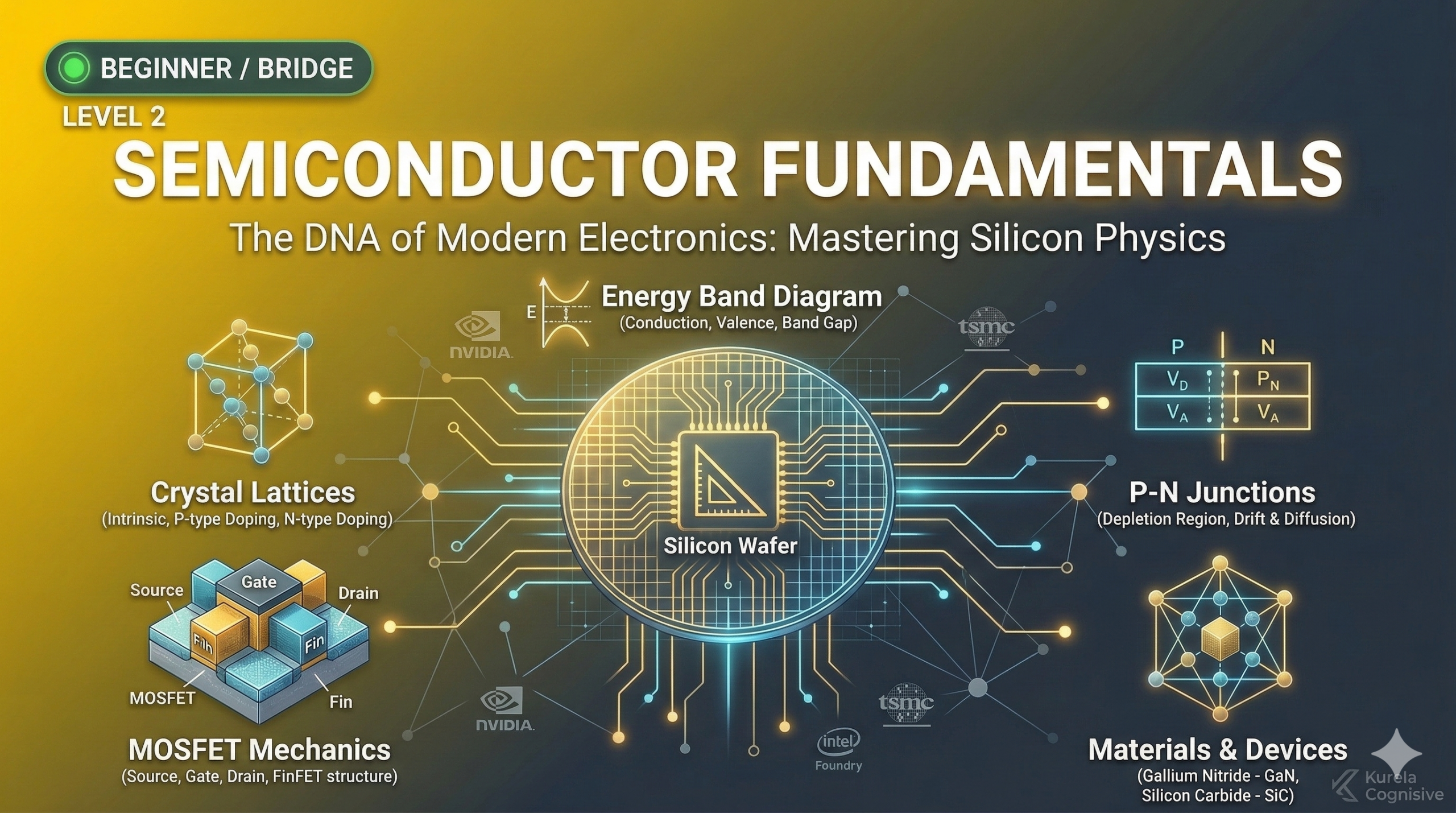
Semiconductor Fundamentals
Master the foundational principles that power the global semiconductor industry.…
Free
Learn More
Introduction to Semiconductor Technologies
In 2026, semiconductors are the “new oil”—the most critical resource…
Original price was: ₹100.00.₹90.00Current price is: ₹90.00.
Introduction to AR, VR & Immersive Technologies
Augmented Reality (AR) and Virtual Reality (VR) are transforming how…
Free
Learn More
Explore All Products
Related Course
Introduction to AR, VR & Immersive Technologies
Augmented Reality (AR) and Virtual Reality (VR) are transforming how…
Free
Learn More
3D Fundamentals for AR/VR
Original price was: ₹100.00.₹90.00Current price is: ₹90.00.